Tuesday, March 3, 2020

David Lachapelle

Image result for david lachapelle
Photo Credit : Wikipedia

American Jesus: Archangel Michael Jackson, 2009

David was born in Connecticut in 1963, when he turned nine his family moved to North Carolina where he studied at the North Carolina School of Art and at the age of fourteen he moved back to Connecticut. Another school he studied at was New York's School of Visual Arts


He is well known for his advertising, fine art and fashion in his work. Throughout his pieces, he displays humor, sexuality, and uniqueness. When he was 17 he was discovered by Andy Warhol. Since then he has worked for many huge magazines like Vogue, Photo, GQ, Vanity Fair, and Rolling Stone. Lachapelle has worked with many stars as well, Angelina Jolie, Shakira, Britney Spears, and Lizzo to name a few. Lachapelle's work is inspired by  Richard Avedon, Andy Warhol, and many more. His photos draws the attention of the viewers and let the audience question what was the story behind this photo.

Image result for david lachapelle Lizzo
Lizzo - 2020
His work intrigued me to choose him because it does show creativity and he inspires me to shoot my photos in different ways. David Lachapelle has an interesting portfolio and I think from his work I can think of ways to better my work.
 "This is my house" - 2019
Angelina Jolie : Secret touching

Friday, February 14, 2020

Portfolio 2

ISO 400, f/20/, 00:30 - Orion's Belt


ISO 100, f/4.5, 1/60 - A field of thoughts
ISO 400, f/3.5, 00:30 - Star Light
ISO 100, f/5, 0.8 - Lex's Choice
ISO 400, f/3, 00:30 - My Neighbor Stars
ISO 100, f/4, 00:30 - Fast Forward
ISO 400, f/4.5, 00:30 - Too fast for the Farm
ISO 100, f/10, 1/60 - School's Out
ISO 100, f/10, 1/60 - My View
ISO 100, f/10, 1/60 - Cloudy Skies

ISO 100, f/25, 1/30 - Sanderl's go to
ISO 100, f/5, 1/100 - Rain 

ISO 100, f/18, 1/6 - Back to the past

ISO 100, f/18, 1/6 - First Blurred
ISO 100, f/5, 0.8 - Kauai Bus
ISO 100, f/5, 0.4 - Blurred Lines

ISO 100, f/5, 0.8 - Sonic
ISO 100, f/18, 1/60 - Sunny 

ISO 100, f/22, 1/60 - Corner House
ISO 100, f/22, 1/60 - Saint Catherines
ISO 100, f/4, 00:13 - Speed is a need
ISO 100, f/4, 00:13 - Fire


ISO 100, f/3.5, 00:10 - Focus
ISO 100, f/4.5, 00:10 - Stance

Tuesday, February 4, 2020

Exposure Triangle

Image result for exposure triangle
Photo Credit
The exposure triangle in simple terms shows the exposure of the photo using the three points: aperture, shutter speed, and ISO. Aperture is the size of the hole that lets in light. The shutter speed or exposure time is the length of time the light is being let into the camera. With faster shutter speed, the motion is being frozen but with slower shutter speed, the motion is one long movement. For example, for a waterfall, the water will look like silk. Lastly ISO, this is the camera's sensitivity to light. When balancing these three components the image will have the desired look depending on the photographer's preference. The exposure triangle is the beginning of creating an impactful image. 


By understanding the relationship of the exposure triangle we can estimate "the perfect" measurements for each photo. For example, shooting a water landscape image the photographer will need to have a tripod for starters. Then we will look at the brightness of the scene if it is midday we can use the ISO 100 since it is the lowest and do not want a washed-out white image. Next, we will look at how long we will have the light coming into the camera, shutter speed. For this, since the photographer is shooting the water they will use longer shutter speed for silky looking water. And for aperture, the smaller the hole the more focused the whole image will be the bigger the hole the camera will focus on the foreground and blur the background. Ideally using the smallest aperture will have a better outcome for a water landscape. 

In conclusion, the exposure triangle parts consist of aperture, shutter speed, and ISO. In other words is the size of the hole, length the camera is being exposed to light and the sensitivity of light to the camera. Keeping them in mind while taking photos can lead to a quality image.

Thursday, January 30, 2020

Sebastião Salgado Biography

Image result for Sebastião Salgado
Sebastião Salgado Biography
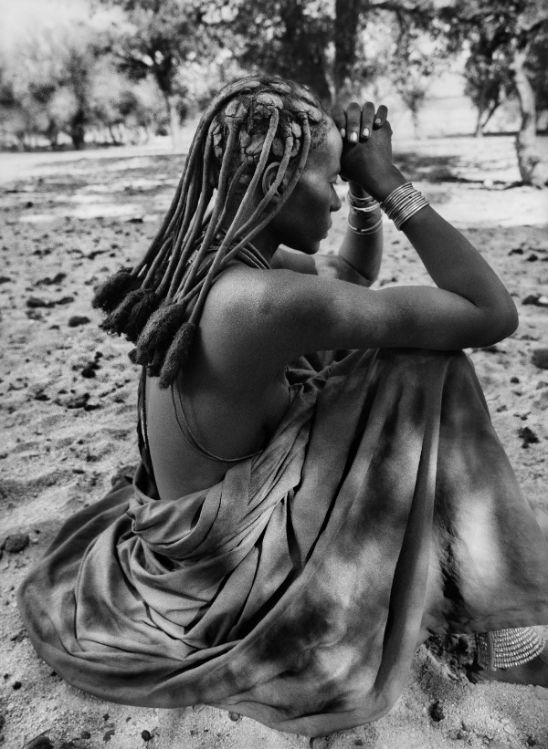
A Himba Woman, Kaokoland, Namibia, 2005
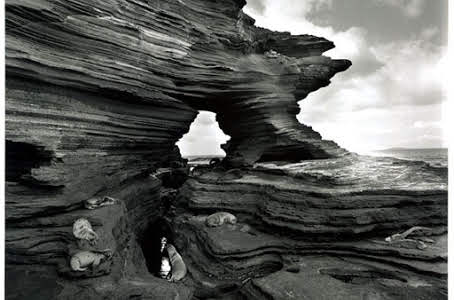
Black and white Brazilian photojournalist Sebastião Salgado displays the sorrow of the homeless and the oppressed. He also shoots astonishing nature and landscapes. His most famous work “Sea Lions at Puerto Egas in James Bay, The Galapagos from Genesis” was shot in 2010. This piece is displayed in the Borusan Contemporary in Turkey.
Sea Lions at Puerto Egas in James Bay, The Galapagos from Genesis
Sea Lions at Puerto Egas in James Bay, The Galapagos from Genesis - 2010
Some background information he was born in 1944 in Aimorés, Brazil. He was the son of a cattle rancher and was expected to become a lawyer. What he ended up doing is studying economics at São Paulo University and graduated with his master’s in 1968. While he worked as an economist for the Ministry of Finance (1968-69) he was involved with a popular movement against Brazil’s military and was exiled. He and his wife fled to France and he continued his studies at the University of Paris. In the year 1971, he had an assignment in Rwanda as an economist and with this assignment, he took his first photographs and decided to self teach the craft and later freelanced photojournalism in 1973.
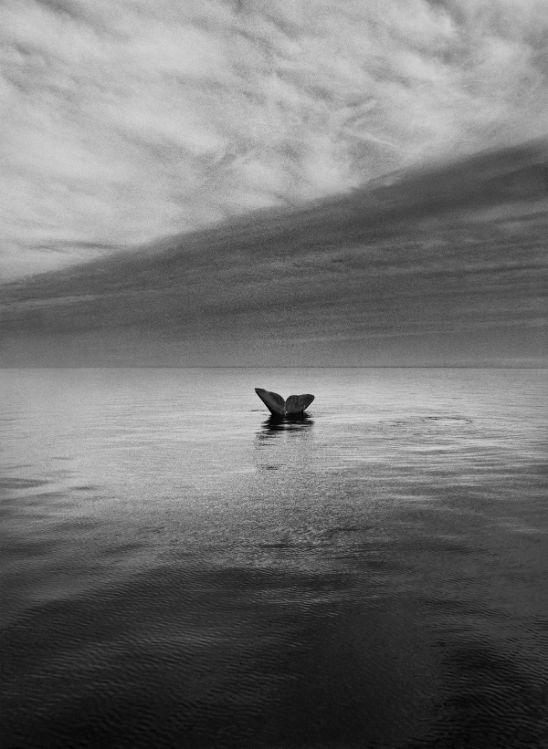
Southern Right Whale Tail, Valdés Peninsula, Argentina, 2004
Crossing the Ob River, Siberia, Russia, 2011

Giant Tortoise, Galápagos Islands, Ecuador, 2004